How common are heart attacks?
Around 80,000 people are admitted to hospital following a heart attack. The earlier someone seeks help if they suspect the are having a heart attack the better the prognosis. Currently the survival rate is about 7 in 10. The NHS are encouraging people to call the emergency services earlier. it is estimated this would help to 9 out of 10 people to make a full recovery.
- Heart and circulatory disease, also known as cardiovascular disease, causes a quarter of all deaths in the UK. It is the largest cause of premature mortality in deprived areas.
- Between April 2019 and March 2020 over 86,500 people had a heart attack (and were admitted to hospital) across England, Wales and Northern Ireland
Consequently the NHS are running a major campaign to help people recognise early signs and symptoms.
Signs and symptoms of a heart attack:
New NHS research shows that 70% of those surveyed understood that pain in the chest is a symptom of a heart attack. However, just 41% knew sweating was a symptom. Only 27% understood feeling weak, lightheaded or a feeling of general unease were also symptoms.
- Symptoms of a heart attack can include:
- chest pain – a sensation of pressure, heaviness, tightness or squeezing across the chest
- pain in other parts of the body. It can feel as if the pain is spreading from your chest to your arms. (Usually the left arm is affected, but it can affect both arms), jaw, neck, back and tummy (abdomen).
- feeling lightheaded or dizzy
- sweating
- shortness of breath
- feeling sick (nausea) or being sick (vomiting)
- an overwhelming sense of anxiety (similar to having a panic attack)
- coughing or wheezing
- Chest pain can be severe. However some people may only experience minor pain, similar to indigestion. The most common symptom of a heart attack in both men and women is chest pain. But women are more likely to experience other symptoms such as shortness of breath, nausea/vomiting and back or jaw pain.
Post-menopausal women and people with Diabetes are less likely to experience chest pain.
What is the difference between a heart attack, cardiac arrest and angina?
A heart attack occurs when the supply of blood to the heart becomes blocked. This can starve it of oxygen potentially causing serious muscle damage. Someone having a heart attack will be conscious and breathing.
A cardiac arrest is different – it usually occurs suddenly and without warning with the person quickly losing consciousness. Their heart stops, they will have no pulse and sadly people experiencing a cardiac arrest will usually die within minutes if they do not receive CPR and treatment. A heart attack can lead to a cardiac arrest.
What’s a heart attack?
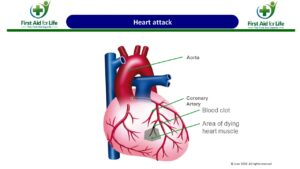
A heart attack occurs when one of the coronary arteries becomes blocked. The heart muscle is robbed of its vital blood supply and, if left untreated, will begin to die because it is not getting enough oxygen. If you are having a heart attack you are likely to be conscious and breathing. Cardiologists have a saying ‘Time is muscle’. This means that the longer a heart is deprived of oxygenated blood the more damage can occur. If someone is quickly transferred to hospital and the blood supply restored, they can make a good recovery.
What’s cardiac arrest?
A cardiac arrest is when a person’s heart stops pumping blood around their body and they stop breathing normally. If your heart stops pumping blood around your body your brain becomes starved of oxygen causing you to become unconscious and stop breathing.
If someone is in cardiac arrest they will be unconscious and need to receive CPR immediately. They will also need you to use a defibrillator and call an ambulance to give them a chance of recovery.
What is angina?
Angina is discomfort caused by heart muscle complaining due to a reduced blood supply as blood tries to force its way through a narrowed artery.
How to help someone having a heart attack:
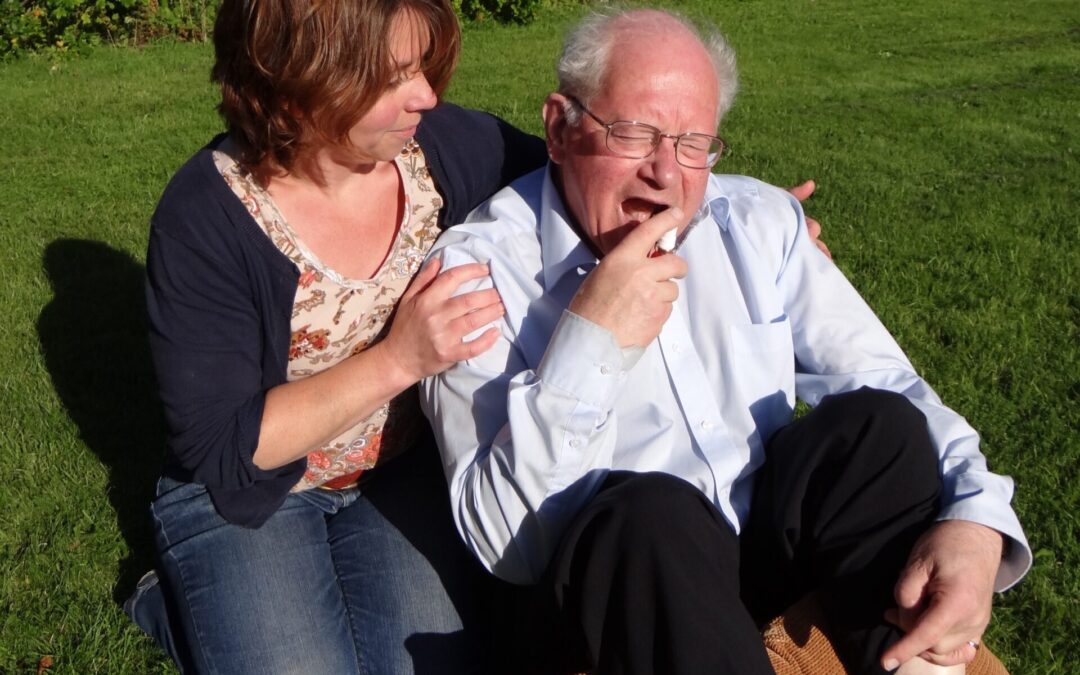
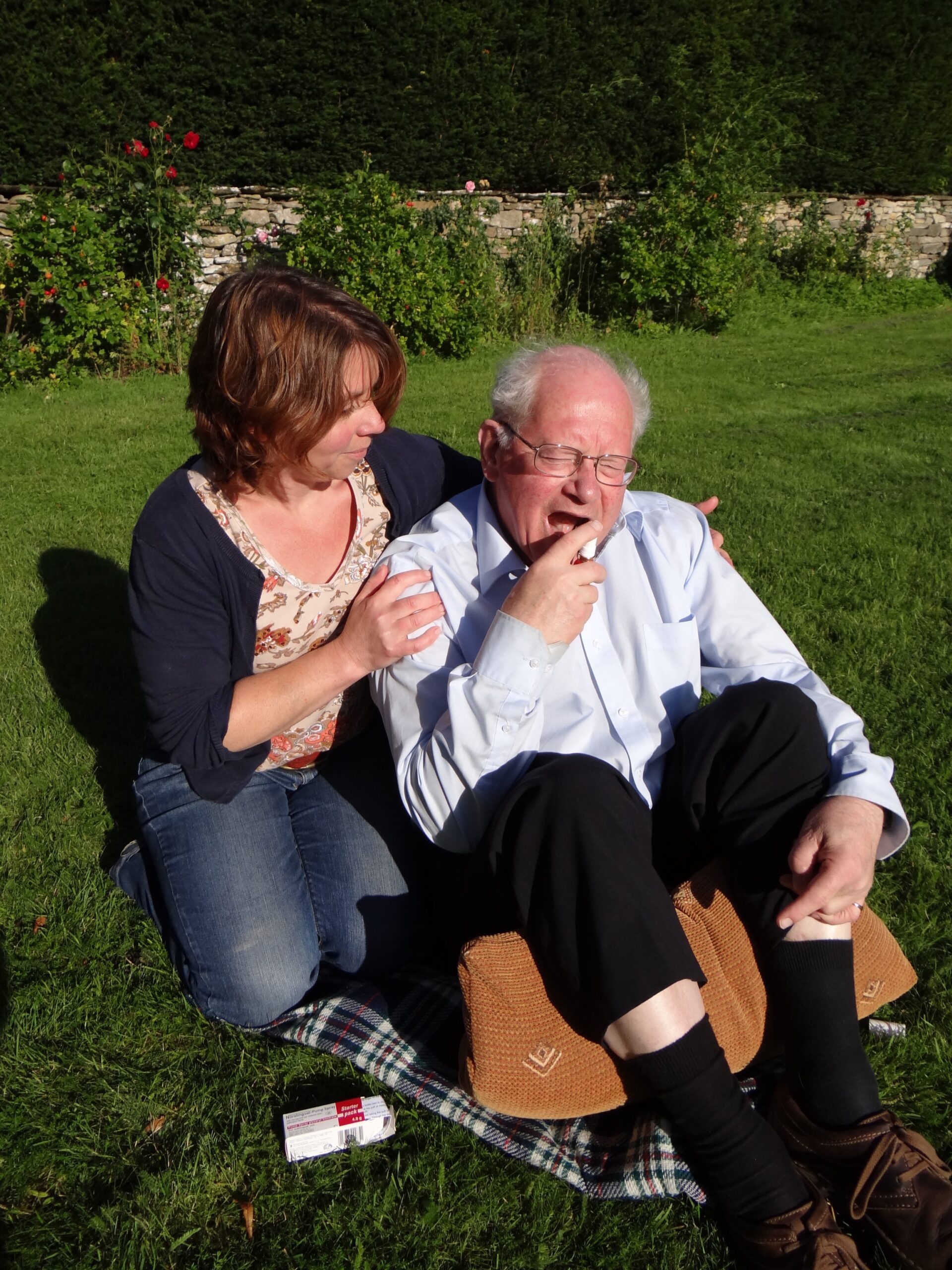
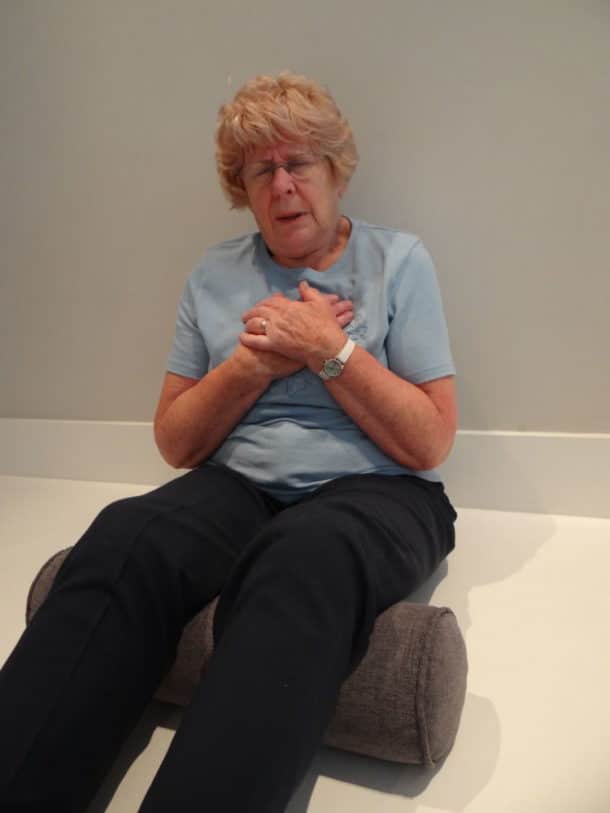
If you think someone might be having a Heart Attack, stay as calm as you can and encourage them to sit down. It will be easier for them to breathe if they remain upright and so you should support them in a comfortable position. Placing something under their knees can help their circulation.
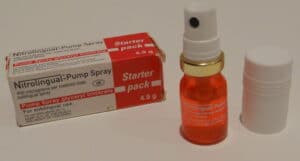
If they have been prescribed a GTN spray, they should use this now (spray it under their tongue) and if they are suffering an angina attack (rather than a heart attack) this should help. GTN helps to dilate the blood vessels surrounding the heart to improve the flow to the muscles.

If the GTN does not help and they have been prescribed a 300mg Aspirin tablet, they should chew this.
Remain calm and reassuring around the casualty, but phone for an ambulance and if there is a defibrillator available get it now and discretely have it ready to use immediately if they lose consciousness and stop breathing.
A heart attack can lead to a cardiac arrest.
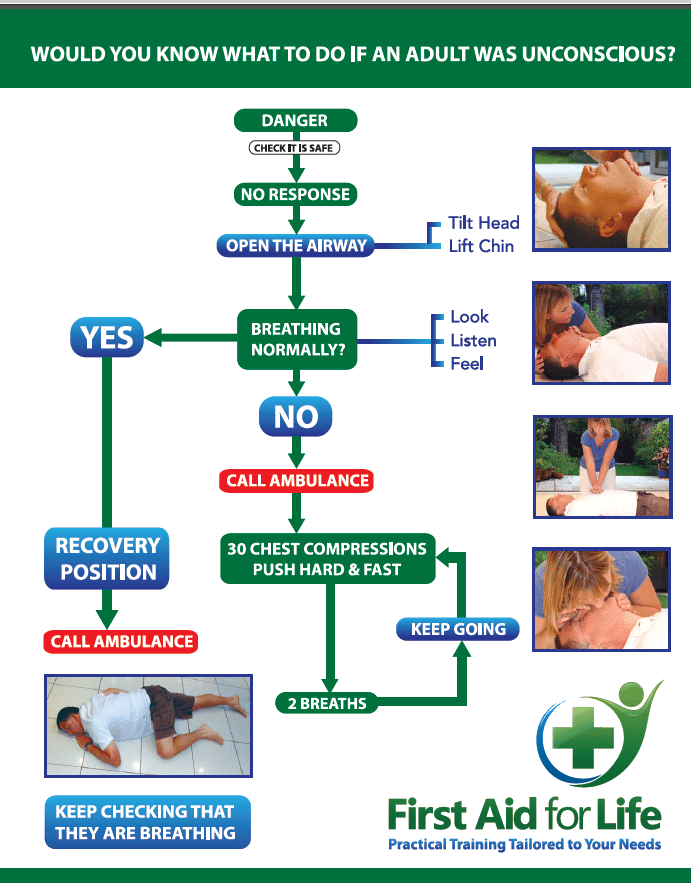
If they become unconscious and not breathing, phone an ambulance and start CPR – pushing hard and fast on the centre of the casualty’s chest – see the flow chart below. Deploy the defibrillator as soon as possible.
In the UK alone, there are over 30,000 Cardiac arrests occurring outside of hospital each year. Studies have shown that if someone has a Cardiac Arrest in the Community with no defibrillator immediately available, there is only a 6% chance of them surviving; even if someone is performing great CPR on them. However, if a defibrillator is used within the first 3 minutes of someone stopping breathing, their chances of survival jumps from 6% to a staggering 74% with a 10% reduction in survival rate for every minute of delay.
AEDs
Automatic, External Defibrillators (AED) are now widely available; located at many train and tube stations, shopping centres, dentists and GP Practices, sports grounds, leisure centres and offices. However, people do not always know where to find them and are often scared to deploy them – Read our article on common myths about defibrillators
The Karolinska Institute in Sweden are currently tested a drone which could deliver defibrillators to the scene of a casualty having a cardiac arrest. They can also remotely talk people through how to use them. Their research suggests that these drones could arrive at a destination up to four times faster than an ambulance, saving valuable time and increasing their chance of survival.

Accidents on the Road – how to help safely
Road Safety Roads are busy with cars, buses, taxis, bikes and pedestrians. Since Covid19 many people are avoiding public transport. More families are out riding their bikes. At the same time, electric cars are also gaining popularity. They are silent, so you or your...

10 essential tips to keep safe in crowds
Huge crowds can be daunting for any of us, and unfortunately there have been a few high-profile events when things have gone radically wrong. In Korea 156 young people died when they got crushed in a narrow street. Sadly, there have been a few other serious incidents...

5 top tips to ace your carer interview
Carer interview Working as a carer is both a rewarding and challenging career. The impact that a carer can have on someone else’s life is indefinable. The care industry in the UK is constantly evolving and the need for care is only going to increase. In the next 25...
How to help whilst waiting for an ambulance
If you are first on the scene and find someone who has collapsed or had an accident, what you do in those first minutes is critical. Most ambulances aim to get to a life-threatening emergency within eight minutes. However, a lot can happen in 8 minutes and the first...

The heart of the matter – everything you need to know for heart health
Everything you need to know about heart health from cardiac arrest and CPR, to heart attacks and high blood pressure. The heart is one of our most vital organs and fundamental to life. We have written so many articles on this amazing organ, here is a review of some of...

How to get up after a fall
It’s a shocking statistic, but each year over 4,500 people in England and Wales die following a fall. Nearly a third of a million people will also need hospital treatment. It is often older people who suffer from falls and unfortunately many of them may never recover...

7 essential first aid skills that all carers should know
These days, many of us have caring roles, both personally and professionally. There has been much talk in the press about the ‘sandwich generation’, where people in their 30s and 40s are now not only caring for their children but are caring for elderly parents...

Asthma & Older People
People over the age of 65 are more likely to have asthma than any other age group in the UK. The Facts Three people die per day due to asthma and, tragically, two thirds of these deaths are preventable. Asthma.org.uk. Being a potentially life-threatening condition, it...

Covid vaccines – all you need to know
Throughout lockdown First Aid for Life will run as normal, holding both practical and online First Aid courses. Our team are still here for you and we will support you as you need. As a registered nurse in the midst of this crisis, I wanted to do my bit to help. The...
Friends Against Scams – Scams: What’s the Problem?
https://www.youtube.com/watch?v=TQVhm8Wn8OE
If you have a defibrillator available; open it up and it will start talking to you. Dry the casualty’s chest and position the pads as illustrated on the pads themselves. Ideally someone should be doing CPR whilst another person is putting the pads onto the casualty’s chest and concentrating on the defibrillator. Keep going (listen to and observe the prompts from the machine) and do not stop until the paramedic is there and ready to take over or the casualty begins to regain consciousness.